About Social Tipping Points and Climate Action

DEEPTI’S RESEARCH DISPATCH


Also known as phase transitions and critical mass. A research roundup

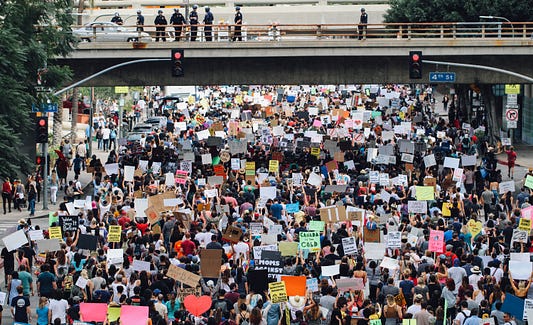
Photo by erin mckenna on Unsplash

Social tipping points are the mechanism by which social change spreads and sparks transformation. In my writing, I frequently talk about social tipping points toward climate action as a goal to aim for.

Here, I dive deeper into the concept of tipping points and its connection to social change with a tour of the research I’ve collected.

I’m hoping this will be a useful reference to come back to whenever discussions of the topic arise.

What are tipping points?

A tipping point is the colloquial term for a phase transition, or the phenomenon where incremental changes in a system reach a critical threshold, leading to rapid transformation.

You may have heard of tipping points from Malcolm Gladwell’s book, The Tipping Point.

This phenomenon goes by many names, since it’s seen in many parts of the natural world, including changing phases of matter, nuclear fission (where the term ‘critical mass’ comes from), ecological shifts, swarm behavior of insects, epidemics, and the rise and fall of societies.

Going forward, I will use the term ‘phase transition’ most of the time.

Phase transitions in everyday life

Phase transitions are a common mental model in popular culture for situation where we keep applying effort, but we don’t see the results until all the pieces click into place.

This blog post on Farnam Street has a good roundup of writing on the concept, and explains:

As a mental model, critical mass can help us to understand the world around us by letting us spot changes before they occur, make sense of tumultuous times, and even gain insight into our own behaviors. A firm understanding can also give us an edge in launching products, changing habits, and choosing investments.

In Atomic Habits, James Clear uses the metaphor of incremental temperature change and the melting of ice to describe habit change.

Writings on technologymanagement, and world peace also use the concept.

How are phase transitions modeled?

The natural examples of phase transitions I mentioned (matter, nuclear reactions, viruses) above involve systems with individual units or ‘agents’. Observations of these systems show evidence of the phase transitions behavior.

Scientists have also developed a variety of agent-based and equation-based mathematical models and simulations to explain the mechanism behind the observed behaviors of the systems.

These models can be run with various adjustments to their parameters to see how they affect the phase transition.

Why does the concept apply to social change?

Often, the models of ‘agents’ in a system are fairly simple. Societies, on the other hand, are made up of humans who are famously impossible to predict or model accurately.

Still, we can extract useful qualitative insights about collective behavior even from simple model.

This is a long ‘un! You can read the rest on Medium (you don’t need to have a Medium subscription).

* * *

Understanding phase transitions has completely revolutionized my approach to climate action.

I constantly think about how my participation connects to a wider dynamic, and that helps me be both more strategic and more hopeful.

Here’s my free resource to overcome overwhelm and find clarity on YOUR personalized next step to protect the environment.

Also appears: LinkedIn

About My Creative Process

If you’ve looked around this blog, you can probably tell I have a ton of interests and projects! The main areas I like to work in are art, research, fiction, nonfiction, and, of course, climate.

I’m usually working on a handful of projects in parallel, and bounce between them as inspiration strikes. Inspiration can be unpredictable, which is a challenge when it comes to planning ahead. 

The two terms that, combined, best describe the way I work are ‘multipotentialite’ and “methodological-pantser.” The first refers to having many different interests. The second term comes from a categorization by novel editor Ellen Brock, extending the plotter/pantser dichotomy to more dimensions. It means that I like using systems and methodology in the short term, but in the long term, I’m winging it.

Put together, those traits result in a pretty chaotic way of working! (Well, I like it. Never a dull moment.)

So, it’s been important for me to figure out how to be organized and maintain continuity on projects that progress in fits and starts. I cycle between projects in short bursts, and I need to be able to capture everything I need and pick them up easily.

Identifying my work style was a huge step up, creatively. Being organized and planning don’t come naturally to me, which is why they’re often on my mind. I write about my creative process while I figure it out, in the spirit of showing the behind-the-scenes (and pushing back against one-size-fits-all productivity advice). 

I’ve been experimenting with organizing my work into short series or art challenges (10 days, month-long), which worked amazingly well

I also make tools and worksheets for myself. And for you, if you are someone who works a bit like I do. And if not, hopefully, my process is interesting as a data point to consider as you discover what does work for you.

Also appears: Medium, LinkedIn

How Do We Increase Adoption of Reusable Coffee Cups?

I’ve been curious about the logistics of reusable coffee cups, since they are a good case study for sustainability in the food industry. (And I love coffee. And mugs.)

Grabbing a quick coffee on the go is ingrained in a lot of people’s lifestyles. What would it take to modify this habit to eliminate waste from the use of disposable cups?

In this post, I’m approaching the question from the point of view of a designer. We can make changes for ourselves, but to really make a dent in the waste problem, we need to increase the overall adoption rate of the changes. 

As I wrote in my recent piece on time poverty, we need to design sustainable behaviors while taking into account everyone’s constraints, including the busiest among us.

Below, I go into the research to get our wheels turning on this design problem.

Bringing your own cup

Customers bringing their own reusable cups is one readily available option to reduce waste. With a few lifestyle adjustments on our part, it can become second nature.

Let’s think through the logistics of having a reusable mug handy when you need it. There are a few different actions you would need to add to your day:

  1. (Remember to) pack your cup before heading out for coffee.
  2. Ask the barista to serve the coffee in your own cup.
  3. (Remember to) bring your cup back in the house.
  4. Put the cup into your dishwashing workflow (either the dishwasher or hand-washing).
  5. (Literally) rinse and repeat.

These actions can become part of your routine if you identify cues for or schedule each of these steps into your week.

One question to consider here is how many reusable cups you will need. Naturally, it depends on how often you do your dishes. If you run your dishwasher a few times a week, you’ll need enough cups to last till the next run.

The environmental tradeoffs work in our favor if we maximize the number of times we use our mugs. This article in Anthropocene Magazine explains why:

Indeed, only with frequent use can one decrease the potential impacts of the reusable cup; it would take between 20 (human health category for a polypropylene travel mug) and more than 1,000 (ecosystem-quality category for all travel mugs) uses, depending on the cup/mug type and the environmental indicator, to make up for the impacts of a single-use cup. If a reusable cup is used fewer times than that, the single-use cup is better for the environment.

What should we do then? Can we help the environment? The answer is yes: by reusing your cup for several years and by limiting the quantity of soap and hot water for washing it, the reusable cup should be the way to go. Limiting your coffee intake could also be something to look at, but that is another problem altogether.

Washing the cups efficiently is important. Here are some estimates around the effects on water use:

Water Footprint Calculator has estimates for the amount of water used in hand washing vs dishwashers for a load of dishes.

Hand washing one load of dishes can use 20 gallons of water, whereas water- and energy-efficient dishwaters use as little as 4 gallons.

…and this Guardian article has estimates for the amount of water used in making disposable cups.

[…] it takes water to brew the coffee (0.05 litres), but even more to make the plastic lid (2.5 litres) as well as the paper cup and sleeve (5.6 litres).

Let’s do some back-of-the-envelope calculations to compare the water use of reusable cups vs. disposable cups, per drink. Since I’m calculating ‘per drink’, I’m not factoring in the water used to make a reusable cup. I’m assuming you will reuse the cup often enough for it not to matter.

Say you drink 5 cups of coffee a week. The quote above means one disposable cup (with lid) takes 2.1 gallons of water to make, so the water use associated with the cups per week is 10.5 gallons.

With a reusable cups, I’m going to estimate how many more loads in the dishwasher you need because you added reusable cups to the mix. Let’s say you use five reusable cups a week. I think that’s about 1/6th of a dishwasher load (just eyeballing my own dishwasher, I think I could get at least 30 cups in there). So that’s an added weekly water use of 0.67 gallons per week.

Okay! So that was some fun math, and not terribly precise. But it validates that that having a few reusable mugs, using them for as long as possible, and washing them efficiently is a huge improvement on getting a disposable cup every time.

Changing the culture around to-go coffee

Bringing reusable cups has not caught on (yet). Research in the UK suggests that only 5% of hot drinks are sold in reusable cups brought by the customer (as described in this article from Circular Online). I would speculate that the numbers in the US are similar.

One of the challenges of bringing your own mug is that it requires time and thinking ahead. Unfortunately, these are often in short supply.

How did we get here?

I read up on the evolution of the to-go coffee cup and cultural environment that led to it, is as outlined in this fascinating article in Life and Thyme:

In America, we see the coffee cup as a symbol of the modern professional — the marker of a person on the go. We assert that we have no time to spare to sit with a steamy cup, but must take our jolt of caffeine on the road (or down the sidewalk, or up the elevator) to face the day full-force.

[…] In 1907, a Massachusetts lawyer Lawrence Luellen, invented the first disposable cup to stop the spread of germs from these communal cups. His invention, originally called the Health Kup, would develop into what we know as the dixie cup today.

[…] In 1952, the Pan American Coffee Bureau coined the term “coffee break.” This made official the practice that began in defense plants during the war, when tired workers needed a few minutes of rest and a caffeine jolt to make it through their long workdays.
[…]
 In 1964, 7-Elevens on Long Island became the first chain stores to offer to-go traveller cups. From there, commuter coffee culture proliferated as chain convenience stores across the country began to carry twenty-ounce behemoth to-go cups, usually as part of a loyalty discount “coffee club.” A 1989 New York Times article referred to this specific travel mug as a “plastic sloshproof wonder” for late-twentieth century commuters.

[…] Starbucks had to standardize their offerings for to-go cups and lids. The company chose the Solo Traveller, a lid designed specifically for drinking on the go. […] There would be no more tearing, pinching or peeling back plastic lids to get to coffee while walking or driving; the traveller lid was ergonomically designed to be sipped from while on the move.

It is like a history of American consumerism, car culture, and hustle culture in miniature!

I guess people reallly like the busy, on-the-go feel of grabbing coffee and power-walking down the street with a briefcase. It kind of goes with the caffeine.

This post from the High Country Conservation Center also points out that online and drive-thru orders, which may be a majority of coffee sales, don’t work with reusable cups.

Personally, I think increasing adoption of customer-brought reusable cups is important, but we shouldn’t count on getting to 100% adoption. According to this article in Bon Apetit:

Disposable coffee cups are here for good, says food historian Cory Bernat, who co-curated the Smithsonian National Museum of American History’s American Food & Wine History exhibits.

“When I look at food culture, it’s all about habit, and businesses have a lot more influence over our behaviors than we like to admit,” she says. “I see companies that are very quick to reassure people it’s OK to ask for convenience, and people who are very quick to accept that offer. People just want this thing out of their hands in the easiest way possible.”

There may always be a segment of the population that doesn’t carry a reusable cup. For them, we need to figure out alternatives. From the same Bon Apetit article:

On the other hand, [Matt] Fury of Think Coffee has emphasized compostability in his disposable coffee cups, with his stores using cups from U.K. firm Vegware, while encouraging people to bring in reusable cups.

“The future will be semi-reusable,” Fury says.

Even so, I’d urge that we do everything we can to normalize bringing your own cup, as well as slowing down in general. 

There are several trends already in this direction, as we grow less enamored of hustle culture in general. All we have to do is accelerate them.

Logistical changes at coffee shops

The coffee shop is where the highest leverage changes can happen. After all, they are the ones procuring all the disposable cups in the first place. They can decide whether to change that.

The first and most basic change that coffee shop managers should do is create a workflow to handle customers bringing their own cups, or requesting a ‘for here’ cup. 

In my experience, either of these requests seems to throw baristas for a loop, because their processes are not designed for it. Sometimes the instruction goes through multiple employees in written form, and there is no clear option to include these serving requests.

This is not these employees’ fault! (Please don’t hassle them about it if they get your order wrong. I shudder to imagine what it’s like to serve pre-caffeinated people in the morning.)

Whoever designs these workflows hasn’t thought through these eventualities, and it’s time they did.

Secondly, coffee shops need to replace all their to-go cups with compostable or recyclable options. Standard paper coffee cups are not recyclable because they are lined with plastic. This means that the second they are manufactured, they are destined for the landfill. They have no place in a sustainable economy.

These were the two most fundamental changes. And there are even more innovative options available…

Reusable cup swap schemes

These are schemes where reusable cups are interchangeable. You can buy your coffee in one cup, and return it at the same (or in some cases, different) coffee shop. Your order is served in one of the pre-washed cups they have on hand.

All the washing is done in efficient, industrial dishwashers. 

And it requires marginally less foresight than bringing your own cup — you can grab coffee on a whim, but you have to remember to bring the cup back eventually. Or you don’t, and the cup is yours and you lose the deposit. 

The main concern would be if people used these cups as if they were disposable. That is the worst of both worlds, because as we saw in the first section of this post, you need to use a cup about a 1000 times to get the environmental benefit. So cup swap schemes will still need some behavior change to go with it. Even so, I find the idea promising.

This Daily Grind post outlines the advantages:

“Our staff wash and sanitise the used cups and then place them back into the float, ready for the next customer,” he [Cyrus Hernstadt, Director of Communications at Think Coffee] tells me. “This saves customers from cleaning their reusable cup at home, as well as diverting a single-use cup from going to landfill.”

Although many customers do have their own reusable cups, visits to coffee shops are often spontaneous — meaning it’s easy for consumers to forget to bring them. What’s more, remembering to clean the cup can be a deterrent for some customers.

 […]

For baristas, reusable cup swap schemes can help to improve workflow. Instead of having to rinse out a customer’s own reusable cup, they can simply swap it for one of the coffee shop’s prewashed reusable cups.

As well as being more convenient for baristas, it’s also more hygienic.

HuskeeSwap helps to reduce the risk of cross-contamination because the cups are washed onsite to higher food safety standards, rather than being brought into the coffee shop from public transport, a car, or a bag,” Michael explains.

Furthermore, reusable cup swap initiatives are more convenient and accessible for many consumers — especially if they have forgotten to bring their own reusable cup and don’t want to use a disposable cup. In the case of HuskeeSwap, Cyrus explains that cups can be borrowed or stored through the app.

Temporary holding containers

The post from High Country Conservation Center mentions a clever workaround for online and drive-thru orders:

There’s also discussions [at Starbucks] of using temporary holding containers for pre-ordered beverages and then transferring to the customer’s own vessel at the drive-through window or at the counter for pre-orders as well as adding a window for customers to drop off mugs for filling at an earlier point in the drive-through process.

From a design perspective, I find these solutions modular and elegant. It just makes sense to me that there would be alternatives to throwing a cup away every single time you drink (an absurd idea if you think about it) that don’t shift all the work to the customer.


To eliminate the waste from disposable coffee cups, we’ll need a combination of approaches so that we cover all segments of coffee drinkers.

The most important changes happen at the coffee shops themselves. For us regular folks, there are multiple levers that might speed these changes along, including regulation and consumer pressure.

I’ve outlined all the research I found on the subject in the hope that it will spark ideas, whether you’re a customer, designer, coffee shop owner, or just someone who cares about the environment.

Here’s my worksheet resource for having a deeply creative work session!

Also appears: LinkedIn, Medium

Individual Climate Action Does Work… If It Has These Three C’s

How to take action that does more than just make you feel better

Photo by Alex Radelich on Unsplash

When talking to environmentalists, I often come across discussions of the value of individual action. The question is framed a number of ways:

  • Which is better, individual action or collective action?
  • Can individual action succeed without cooperation from governments and leaders?
  • Is there any point in individual action?
  • Are we just supposed to passively wait around for the collective? What about our agency?

And so on. It’s like “individual action” and “collective action” are two choices on the menu, and we can only pick one. You also see this framing in news and opinion pieces.

This question doesn’t make a ton of sense to me. You can’t have one without the other, because every collective is made up of individuals. Any collective change that happens is coming from (some of) them.

And if you are planning to take action, the question of whether to take ‘individual’ action is moot. It’s not like you have the choice not to be an individual.

I believe what people are really asking is slightly different.

They want to know if their efforts will be purely performative. They’re worried the actions they could take — making lifestyle changes, signing petitions, going to protests —won’t have any effect other than making themselves feel better.

In my opinion, the difference is not in the choice of action itself. Successful movements are built out of sharing messages, including the very activities we sometimes dismiss as ineffective.

What outcome are we aiming for?

Social change often happens through social tipping points (the concept popularized by Malcolm Gladwell’s famous book).

A tipping point is the colloquial term for a phase transition, or the phenomenon where incremental changes in a system reach a critical threshold, leading to rapid transformation.

Social change has always been sudden and nonlinear. Think of the changes we’ve witnessed in our own lives, like changing opinions toward smoking, the emergence of the MeToo and Black Lives Matter movements, and rise of support for Ukraine. Public opinion changed slowly, then all at once.

The term ‘phase transition’ originally referred to matter changing phases, like water turning to ice. The interesting thing is where the ice starts — it’s not like one corner turns to ice and the change spreads from there. Instead, it happens locally, through a process called nucleation. Small particles of ice form all over the material, and grow until everything is ice.

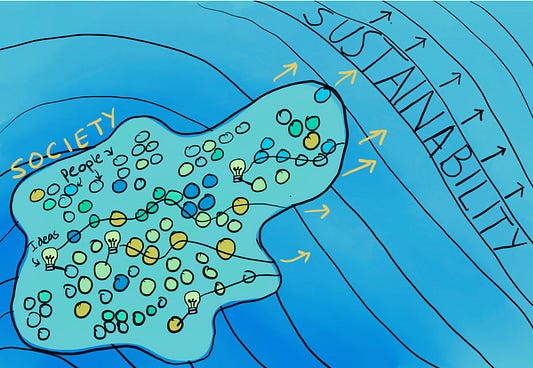
I believe this is how the climate movement grows. It’s not one silver bullet that fixes everything, but accelerating changes originating in multiple parts of society. Grassroots movements around the world, speaking up where they are most likely to be heard, and coordinating among each other.

If this is the outcome we are hoping for, we can see a hint at what makes individual actions effective: when they create the conditions for social tipping points.

You’re still one person, but your actions are a part of a ripple effect spreading through the whole social system.

If you are taking action on any scale, that is already valuable, because it’s a step in the journey. However, if you have the capacity and are looking for ways to amplify your results, here are the 3 C’s that I believe make the difference.

C for Coordination

There’s a difference between writing a letter at random and participating in a letter campaign. There’s a difference between “trying to shop greener” and taking part in an organized boycott.

That difference is the first C: Coordination.

Without it, we are all participating in a million boycotts at once, and canceling out our efforts as we start and fall off when they get difficult to maintain.

But when we coordinate our efforts, we get unprecedented outcomes like over a 1000 companies ending operations in Russia in mere months. It’s because coordination brings other things with it, like focus, passion, and media attention.

What that means for us is that we need to find campaigns (whether they are calls, letters, or boycotts) and join them.

The best way to do that is to find a climate organization that aligns with your priorities, and sign up to its email list. (This can be a task in itself, but it gets easier once you’re plugged into that ecosystem. I’ve written about how to get started here.)

That way we are throwing our efforts behind a viable engine.

And we can amplify those efforts with the second ‘C’…

C for Communication

When you find a method of action that works, share it! You spent the effort to sift through opportunities and make them work. Let that effort benefit someone in similar circumstances: equally busy, with similar skills or misgivings. Friends, family, people at your meetup groups. There’s someone in your circle who wants to do more, and you are the right messenger.

Anand Giridharadas writes that progressives need to be more “small-e evangelical” about our causes. Talking about climate change has been an awkward taboo for too long. Let’s replace the outdated cultural narrative on climate change with a new, better one! To do that, we need to each be conduits for good ideas to spread.

And one of those good ideas? A clear picture of what we are working toward. That brings us to the last ‘C’ …

Illustration of social change, by the author

C for (theory of) Change

Visualizing success is all the rage. While I’m not a fan of the excesses of ‘manifesting’ culture, there’s no denying that knowing what you are aiming for provides clarity, and there is a clear need for it in the climate movement.

We’re often cautious to stake a claim about the future, because, of course, predicting the future is impossible. I’m rather afraid of making predictions myself, whether rosy or apocalyptic.

None the less, to be strategic in our actions, we need to imagine the small, intermediate outcomes we are seeking. Such as, a regulation being passed in your city, adoption rates for solar panels going up, your company reducing its emissions year-over-year.

This exercise is referred to as Theory of Change. The United Nations Development Group defines it as

A theory of change is a method that explains how a given intervention, or set of interventions, is expected to lead to specific development change, drawing on a causal analysis based on available evidence.

On a personal scale, we might do this more informally. We need to be clear on the mechanism by which we expect our actions to improve the global response to climate change.

We often have a vague idea of how our actions help. You might be surprised at what a difference it makes to think through the details of how we can influence specific outcomes.

The exact results or numbers may be hard to calculate, but they don’t matter. We only need to compare the actions we have available. Our best guess at the results is good enough for identifying which actions are worth pursuing and cutting out the distractions.


With the climate crisis, the problems facing us are vast, but so are the numbers of people who want to solve them. The key is to line up and amplify their efforts.

Coordination, Communication, and (theory of) Change: these are the three factors that turn your individual efforts into a solid building block of the kind of movement we need.

Here’s my free resource to overcome overwhelm and find clarity on YOUR personalized next step to protect the environment.

Originally appeared in Age of Awareness.

Understanding Time Poverty Is Key in Addressing Climate Change

Recently, I’ve been noticing that the more sustainable/climate-conscious lifestyle option in our existing society is often the slower one. This means that ‘busyness’ or time poverty is a major barrier to the adoption of behavior changes to address climate change. 

It’s important to address these barriers, because behavior changes like changing purchasing decisions, household behaviors, travel habits, and diet are necessary. (In concert with market, policy, and cultural changes — they all build on each other.) 

For example, I started taking public transport again, for the first time in years. I noticed how it changed the structure of my entire day. Not only did I have to plan around the bus schedule and factor in a longer commute time, but the addition of a walk to the bus-stop and people-watching opportunities made the day feel much slower and calmer.

There are other changes I’d like to make: shopping at farmer’s markets. Cooking more of my meals. Walking or biking places. Taking the train instead of flying. In each case, time is the main constraint.

I’m determined to find a way, because I enjoy these activities more than the modern quick-easy-packaged-default alternative. The problem is that these options are not available to most people.

What is time poverty?

Time poverty is defined as the “chronic feeling of having too many things to do and not enough time to do them,” and it is pervasive. Workers, parents, women, millennials all reportedly suffer from its symptoms.

Time poverty has implications for climate action

The authors of Tackling climate change under time-poverty: Cooperatives as temporal pacers write:

Tackling climate change requires future-oriented action toward unpredictable events, whereas time-poverty requires people to deal with the bare necessities of the present. 

The authors of A Measure Whose Time has Come: Formalizing Time Poverty write:

Research linking the impacts and inclusion of time poor populations need not be limited to social policies — indeed, it is likely that in economically developing countries there is a link between environmental degradation and the time poor, which has implications for climate change research and policies.

We can make sustainable living more convenient

It is both possible and worthwhile to make the sustainable lifestyle choice as convenient as the default one. 

For example, we can invest in public transport systems so that the commute time is comparable to driving. Right now, it takes me over twice as long to get to work by bus than by driving, because the nearest stop is a 20-minute walk from my destination.

Also, we need sustainable alternatives to cooking. It is not inevitable that packaged or delivered meals are usually processed, unhealthy, and unsustainable. That was a design choice made by the companies that dominate the packaged food market. We can make a different choice now.

I would argue that it’s essential that we do. When designing sustainable behaviors, we have to take into account everyone’s constraints. In the future, we need adoption by everyone, including the busiest among us.

And we can decrease time poverty

People are busy and burnt out, and we need to adapt climate actions to accommodate that. But we can also help people be less busy and burnt out. For our own sake as well as the climate’s.

One way to do that is through cultural change. An HBR article points to organizations with a culture of busyness as a cause of time poverty:

The reasons for the rise in “time poverty” (as social scientists have termed it) are numerous and nuanced, but corporate cultures that value busyness are at least partially to blame — and in theory should also be easy to correct.

and…

Even if employees don’t leave, busyness harms the bottom line by reducing staff engagement and increasing absenteeism. It also impairs workers’ health: A 2021 World Health Organization report showed that overwork can increase the risk of stroke, heart disease, and ultimately death. Conversely, research suggests that reducing working hours to manageable levels can enhance productivity.

Society has been re-evaluating our relationship with work since the pandemic, as seen in the Great Resignation, Quiet Quitting, and increased interest in 4-day workweeks. I find all of these trends promising in alleviating time poverty as well as decreasing consumerism. 

In the book Your Money or Your Life, Vicki Robin made the point that a lot of our purchases and time expenditure are driven by our demanding jobs:

Think of all the monetary expenses that are directly associated with your job. In other words, if you didn’t need that money-earning job, what time expenditures and monetary expenses would disappear from your life.

For example, expenditures related to commutes, attire, and recovery from job exhaustion.

What I’m taking away from this is that working less could save us money and time, offsetting the potentially lower pay. 

A slower, more sustainable lifestyle may be feasible for more folks if we can figure out how to get there.


Addressing climate change will require innovation throughout society. I want to urge two particular kinds of innovation with this piece:

  • For sustainability and lifestyle influencers to experiment and try to find creative ways to make their lifestyles accessible to busy people.
  • For entrepreneurs, product designers, and policy makers to direct their innovation to products, services, and plans that make sustainable lifestyle choices more convenient and accessible to time-poor people.

I’m not sure where exactly that innovation will lead, only that it is needed.

Here’s my worksheet resource for having a deeply creative work session!